Why Cute Rewards Actually Make You Walk More (The Science of Gentle Gamification)
It is 9:15 PM on a Tuesday. Your fitness watch flashes an alert: you have logged 4,210 steps, your rings are unclosed, and your seven-day streak is about to snap. Instead of feeling energized, you feel a familiar pang of guilt. You close the app, toss the watch on the nightstand, and stay on the sofa.
If you have ever felt defeated by a fitness tracker, the fault is not your willpower. A landmark 2023 study in the Journal of Consumer Research found that rigid daily streaks frequently backfire: the moment life interrupts and a streak breaks, people feel their past effort was wiped out, making them significantly more likely to abandon walking altogether.
The persistence paradox: why future health fails to move us tonight
Most of us set step goals for rational, long-term reasons: better cardiovascular health, deeper sleep, or a longer life. Epidemiological research confirms these payoffs: a 47,000-person meta-analysis in The Lancet Public Health showed that regular walkers reduce their risk of premature death by up to 50%, with the steepest health gains kicking in between 3,000 and 6,000 daily steps.
The catch is that human neurobiology does not run on delayed payoffs. Researchers Dr. Kaitlin Woolley at Cornell and Dr. Ayelet Fishbach at the University of Chicago tested what actually predicts whether people stick with physical exercise. Across multiple field experiments, they reached an unequivocal conclusion:
“When people engage in an activity that provides immediate rewards, they experience the activity as an end in itself. Immediate rewards predict persistence far more effectively than reminding people of delayed outcomes.”— Dr. Kaitlin Woolley, Cornell University SC Johnson College of Business
Knowing walking helps your heart in thirty years gets you to buy running shoes. But immediate enjoyment is what gets you out the front door tonight.
The 140-millisecond reaction: how our brains process cuteness
When an app uses “cute” rewards—like discovering a tiny red panda or feeding an otter—it can sound frivolous compared to serious fitness metrics. Brain imaging suggests otherwise.
At the University of Oxford, neuroscientist Prof. Morten Kringelbach used magnetoencephalography (MEG) to track how the human brain reacts to cute visual cues, known scientifically as the Kindchenschema (baby schema: large eyes, rounded outlines, compact proportions). His team observed that cute stimuli trigger a surge in the medial orbitofrontal cortex (OFC) within just 140 milliseconds (0.14 seconds).
- Instant reward signaling: The orbitofrontal cortex is the brain's pleasure and reward engine. It releases a micro-hit of dopamine before conscious evaluation even begins.
- Lower stress response: Unlike red warning bars or broken streak alerts, cute visual rewards soothe the sympathetic nervous system.
- Approach motivation: A landmark study in PLOS ONE led by Dr. Hiroshi Nittono demonstrated that viewing cute animal images immediately improves attentional focus and increases willingness to stay engaged with tasks.
In simple terms: a cute visual celebration is a biological fast track to positive emotion. It replaces the harsh “do it or else” pressure of traditional fitness with genuine delight.
What happens when clinical trials test gamified walking
Does game-like motivation translate to real steps in everyday life?
In May 2024, the American Heart Association's flagship journal Circulation published the results of the BE ACTIVE randomized clinical trial, led by Dr. Alexander Fanaroff and Dr. Mitesh Patel. The study followed 1,062 participants over 18 months (a 12-month intervention and a 6-month follow-up) to test how behavioral game design affects daily walking.
The findings were striking:
- Participants in the gamified walking arm increased their daily physical activity by 1,400 to 1,500 additional steps per day compared to those with standard fitness trackers.
- During the six months after the formal intervention ended, the gamified group still logged roughly 1,300 extra daily steps over control, showing that behavioral rewards helped form durable routines rather than a temporary spike in interest.
“Wearable devices alone rarely change long-term behavior. Behaviorally designed gamification levers human psychology to turn mundane daily movement into an engaging, self-sustaining habit.”— Dr. Mitesh S. Patel, Perelman School of Medicine, University of Pennsylvania
The Stanford principle: emotions wire habits, not sheer repetition
Many of us grew up hearing that a habit takes 21 days or 66 days of grinding repetition. Dr. BJ Fogg, founder of the Stanford Behavior Design Lab and author of Tiny Habits, has spent decades studying how human routines actually form. His central thesis challenges the grind mindset:
“Emotions create habits. Not repetition. Not frequency. Emotions.”
When you complete an action and immediately feel a spark of success or warmth, your brain releases dopamine, which tags that behavior as worth repeating. If you drag yourself through 10,000 steps while feeling stressed, your brain tags the walk as punishment.
Fogg's formula for sustainable change relies on two straightforward adjustments:
- Shrink the bar: Pick a target so modest that you can achieve it even on your busiest day (for instance, a 15-minute neighborhood stroll instead of a punishing trek).
- Celebrate right away: Pair the milestone with an immediate, delightful payoff.
A gentler rhythm for daily movement
This behavioral science is the exact foundation behind CanGoGo. We designed it because we were tired of apps that felt like an anxious boss tapping a clipboard.
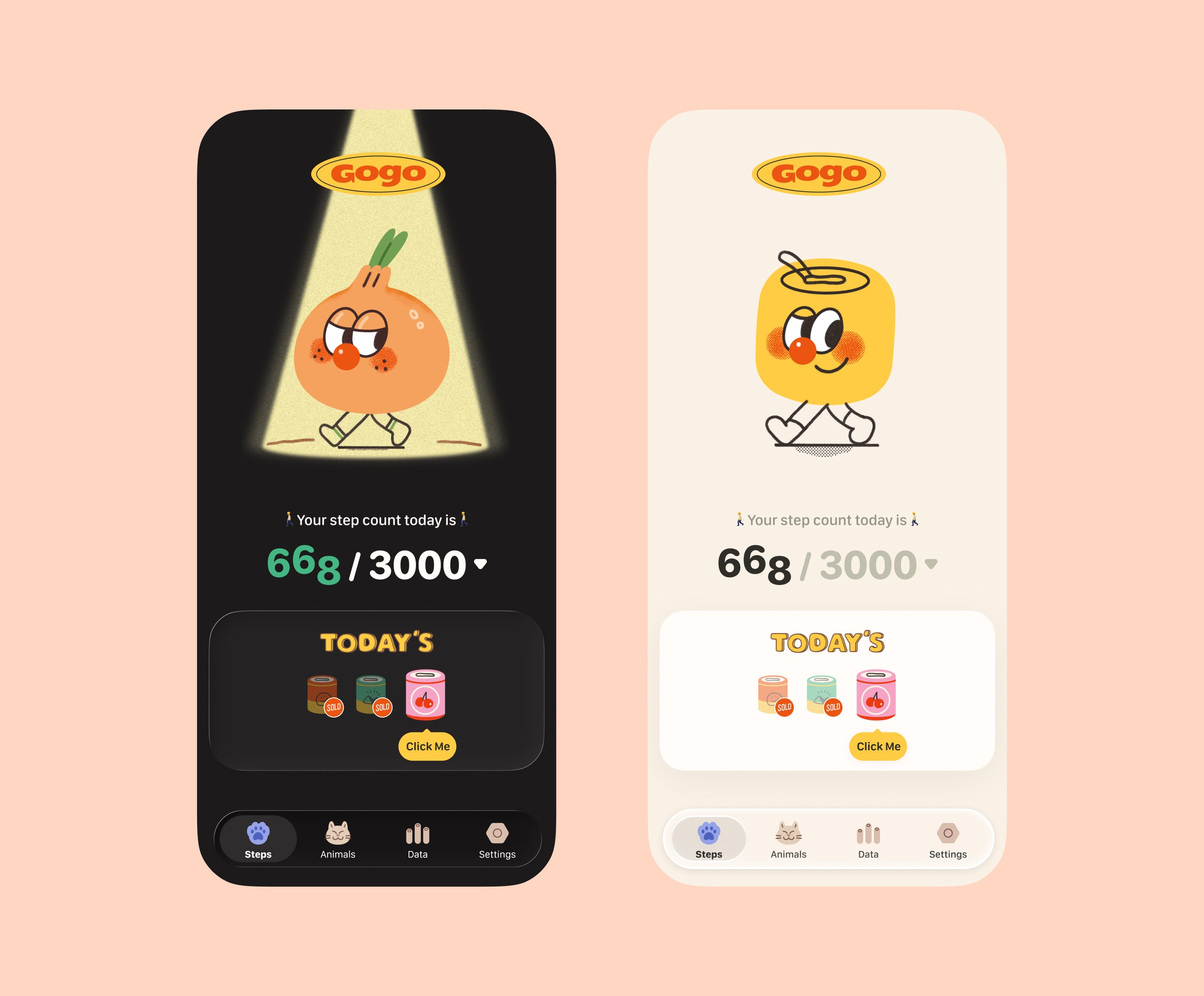
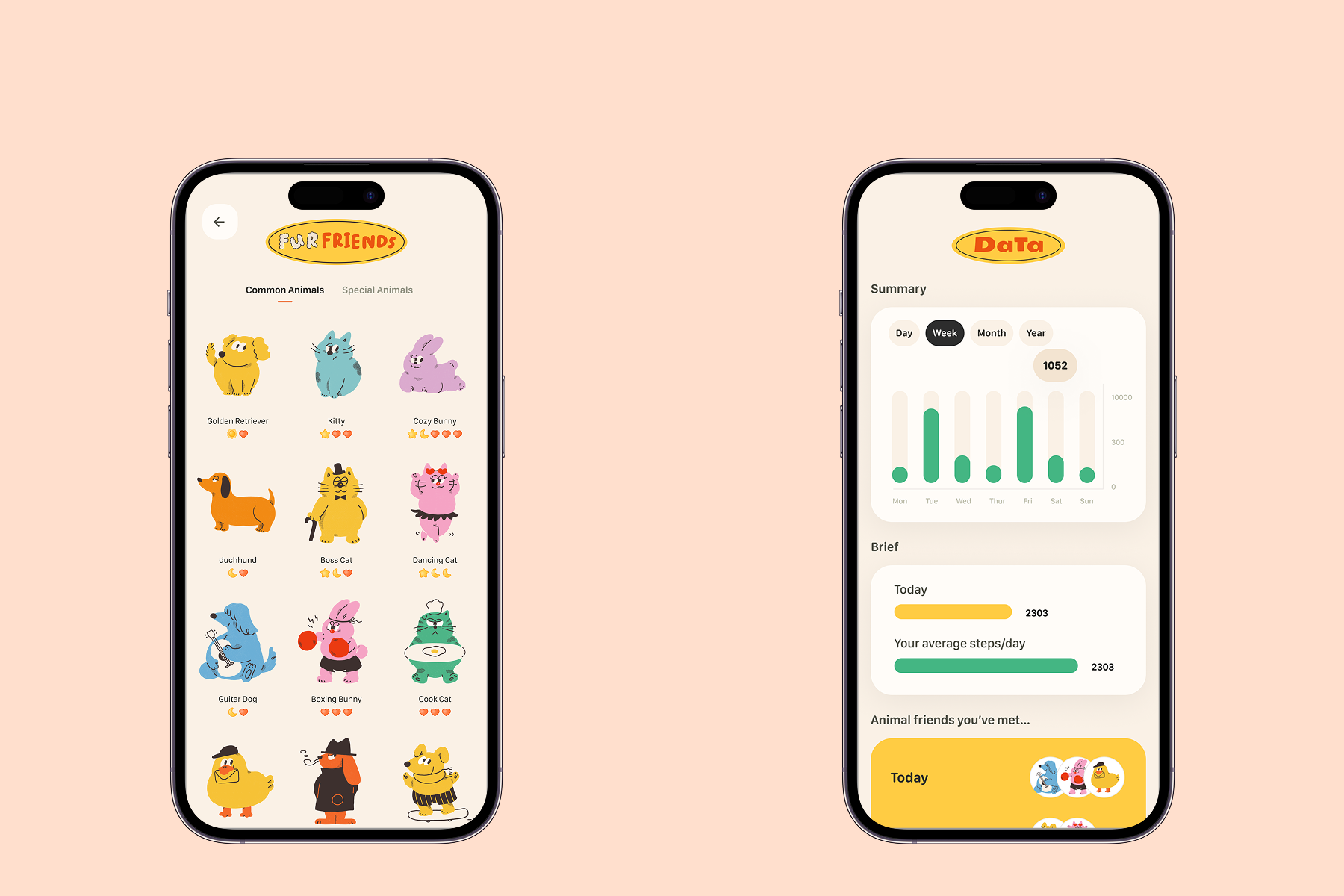
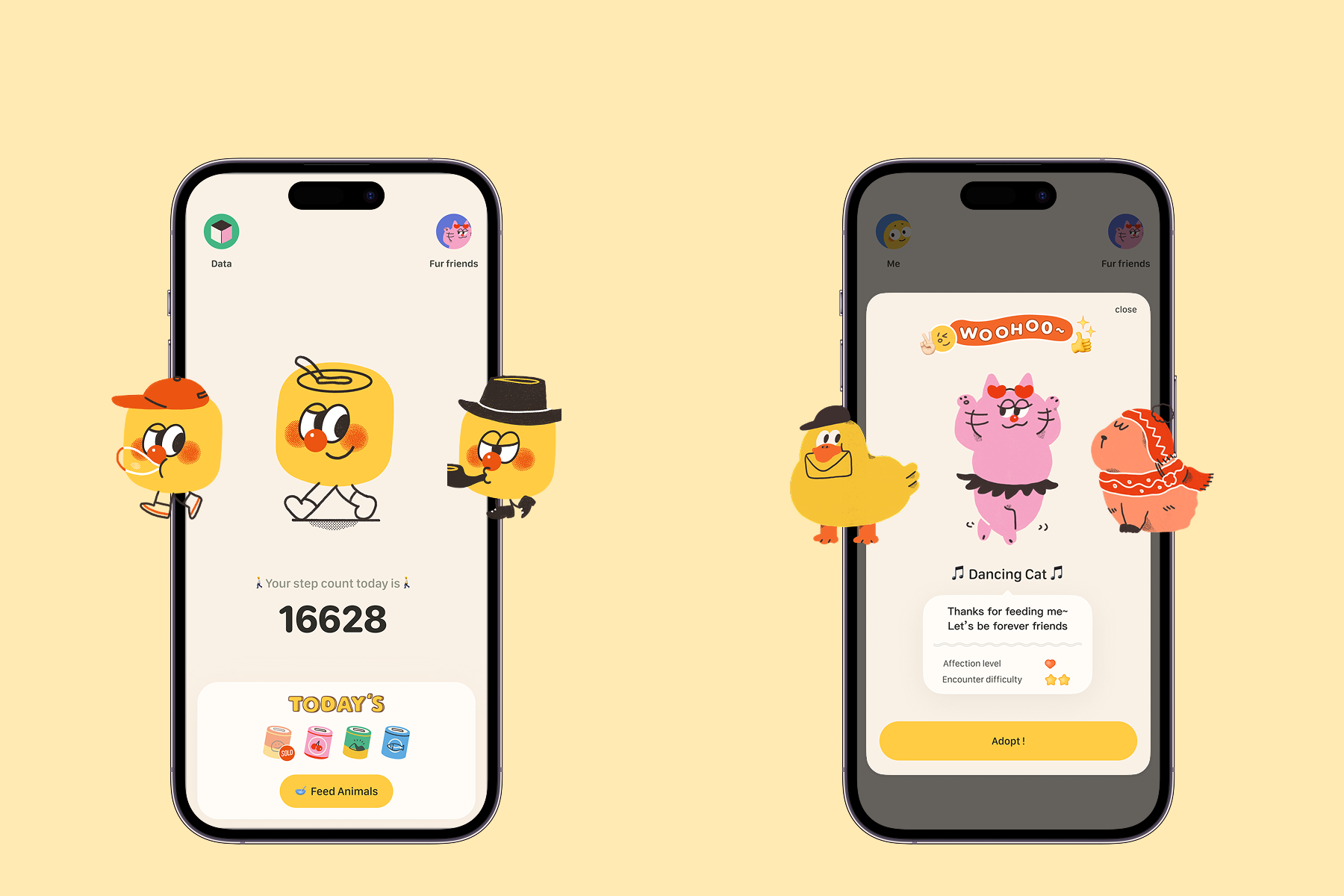
Instead of demanding an arbitrary 10,000 steps before midnight, CanGoGo breaks your day into manageable milestones of 3,000 steps. Each milestone rewards you with an encounter: a cute animal friend—from curious red pandas to sleepy hedgehogs—ready to share a meal and join your collection.
There are no broken streak penalties, no flashing alarms, and no guilt trips. If you walk 3,200 steps on your lunch break, you celebrate an encounter right then. If you have a rest day, your animal friends wait patiently until you are ready to step out again.
Ready to trade fitness guilt for cute companions?
Try a gentler pedometer built around small milestones and warm celebrations. Every 3,000 steps brings a new friend to meet.
Download CanGoGo on the App StoreSources
- Fanaroff, A. C., Patel, M. S., et al. (2024). “Effect of Gamification, Financial Incentives, or Both to Increase Physical Activity Among Patients at High Risk of Cardiovascular Events: The BE ACTIVE Randomized Controlled Trial.” Circulation, 149(21), 1639–1649.
- Woolley, K., & Fishbach, A. (2017). “Immediate Rewards Predict Adherence to Long-Term Goals.” Personality and Social Psychology Bulletin, 43(2), 151–162.
- Silverman, J., & Barasch, A. (2023). “On or Off Track: How (Broken) Streaks Affect Consumer Decisions.” Journal of Consumer Research, 50(5), 903–921.
- Kringelbach, M. L., Stark, E. A., Alexander, C., Bornstein, M. H., & Stein, A. (2016). “On Cuteness: Unlocking the Neural Networks and Behavioral Consequences of Kindchenschema.” Trends in Cognitive Sciences, 20(7), 545–558.
- Nittono, H., Fukushima, M., Yano, A., & Moriya, H. (2012). “The Power of Kawaii: Viewing Cute Images Promotes a Careful Behavior and Narrows Attentional Focus.” PLOS ONE, 7(9), e46362.
- Paluch, A. E., et al. (2022). “Daily steps and all-cause mortality: a meta-analysis of 15 international cohorts.” The Lancet Public Health, 7(3), e219–e228.
- Fogg, B. J. (2020). Tiny Habits: The Small Changes That Change Everything. Houghton Mifflin Harcourt.
- Harvard Health Publishing. (2024). “Can apps help you reach your fitness goals?” Harvard Health Medical Guide.
Medical disclaimer: This article is informational only and is not a substitute for professional medical advice, diagnosis, or treatment. Always seek the advice of your physician or other qualified health provider with any questions you may have regarding physical activity or medical conditions.